Trust is eroding across institutions, societies, and workplaces, and the consequences are becoming harder for business leaders to ignore. Around the world, people are questioning whether the systems meant to support them are fair, transparent, and working in their interest. Increasingly, they are also feeling exploited by the rich and powerful.
This widespread distrust has given rise to what researchers describe as a “crisis of grievance,” a persistent sense of frustration, unfairness, and loss of control that shapes how people view leaders, organizations, and each other.
Scott Evans, Interim CEO at Edelman Canada, explored the scope of this challenge at Workplace Options’ Center for Organizational Effectiveness Summit: Building Workplace Trust. According to the 2025 Edelman Trust Barometer, trust in institutions—including government, media, and business—has declined across the globe, while fear, resentment, and disengagement have increased.
At organizations worldwide, these negative emotions shape employee expectations, workplace relationships, and levels of engagement. Put simply, trust exists when people believe leaders are competent and honest, colleagues are reliable, and everyone is respected. Workers show they trust managers by asking for feedback, offering opinions, and sharing life changes that can affect productivity. They are confident that workload is evenly distributed, financial compensation is equitable, and leaders communicate authentically and transparently. Without that core confidence, employees question leadership’s motives and look for signs of unfair treatment.
Today, senior leaders can no longer take employee confidence for granted. As faith in institutions continues to break down, it is imperative that executives build trust inside their organizations—and prevent grievance from taking root.
Why Trust Is Breaking Down—and Why Grievance Is Rising

Edelman research shows that lack of trust is not evenly distributed. Economic pressure, inequality, and perceived unfairness have created vastly different realities for different groups of workers. Income and economic security remain the strongest predictors of trust.
“Lower income earners continue to live in a very different trust reality than those with higher income levels,” Evans says. “In fact, there’s not a single institution that is trusted among those with the lowest income. Since 2021, we have seen double digit increases of distrust and the fear of being lied to by government leaders, business leaders, and journalists. For anyone in leadership, this is a reality that can’t be ignored.”
This widening trust gap helps explain why grievance has become so pervasive. When people feel economically squeezed, excluded from opportunity, or misled by institutions, frustration escalates. Over time, that frustration hardens into resentment toward those perceived as benefiting from the system—powerful leaders, organizations, and the wealthy.
“Grievance flourishes when there’s a sense that we’re competing for smaller crumbs of a shrinking pie,” Evans explains. “People feel like they’re being taken advantage of, that the system is unfair, and that they’re personally being harmed because of it.”
In practical terms, grievance is fueled by three overlapping forces:
- Economic insecurity, fueled by inflation, global trade conflicts, workplace disruption from artificial intelligence (AI), and fears of job loss
- Perceived inequality, where opportunity feels limited or unevenly distributed
- Erosion of credibility, driven by misinformation and inconsistent leadership behavior
When these forces intersect, employees become more guarded, cynical, and distrustful.
Why Business Leaders Should Care About Trust and Grievance
For CEOs, CFOs, and COOs, trust may feel abstract compared to metrics like revenue, profit margins, or productivity. But Edelman’s decades of research make clear that trust is not a soft cultural issue—it is a core driver of organizational performance.
Workplace trust directly influences employee engagement, a foundational concern for organizations navigating talent shortages, hybrid work, and constant change. Employees who trust leadership are more likely to believe their work matters, that decisions are made fairly, and that effort will be recognized. When trust breaks down, engagement falters.
Grievance accelerates this disengagement. Employees who feel the system is stacked against them are less inclined to collaborate, share ideas, or invest discretionary effort. Over time, grievance shows up as lower morale, higher turnover, reduced innovation, and greater resistance to change.
The business risk is compounded by the fact that organizations have become “trust anchors,” Evans explains. As faith in government and media declines, employees look to employers for stability, transparency, and a sense of fairness. Edelman’s research has consistently shown that people have more confidence in business than any other institution. Keeping that trust depends on whether leaders act competently, ethically, and with concern for people’s lived realities.
“Employees see the workplace as an island of civility, and they expect businesses to keep grievances from undermining collaboration at work,” he says.
In this context, ignoring grievance does not preserve neutrality. It creates a vacuum—one that frustration, misinformation, and disengagement quickly fill.
How Leaders Can Build Workplace Trust and Reduce Grievance

Employers have a critical role to play, particularly because grievance can quietly contaminate workplace culture if left unaddressed. Reducing grievance does not require leaders to solve societal problems—but it does require intentional leadership inside the organization.
1) Create Fairness Employees Can See and Feel
Trust grows when people believe decisions are made transparently and applied consistently. Leaders should examine how pay, promotions, workload, and opportunity are distributed—and whether those systems align with stated values.
Perceived unfairness, even more than actual outcomes, fuels grievance. Clear communication about how decisions are made—and why—helps reduce speculation and resentment.
2) Strengthen Employee Voice and Participation
Employees are less likely to disengage when they feel heard. That does not mean every concern can be resolved, but it does mean leaders must create credible channels for input, feedback, and dialogue.
Organizations that invite employees into conversations about change, priorities, and challenges build trust by demonstrating respect and inclusion. Silence can signal indifference, even when leaders are well intentioned.
3) Invest in Managers as Trust Builders
Day-to-day trust is shaped less by corporate statements and more by frontline leadership. Managers who communicate clearly, set expectations, and address issues early help prevent grievance from spreading.
Many leaders underestimate how quickly small frustrations—unaddressed workload issues, unclear decisions, inconsistent treatment—can erode trust. Equipping managers with the skills to lead empathetically and consistently is one of the most effective ways to protect engagement.
4) Make Psychological Safety a Cultural Norm
Employees are more likely to trust organizations where they can speak up without fear of retaliation or dismissal. Psychological safety supports learning, innovation, and honest communication—especially during periods of uncertainty.
When employees believe that raising concerns will lead to solutions rather than consequences, grievance loses its foothold.
5) Respect a Range of Perspectives Without Letting Conflict Escalate
Global organizations increasingly reflect a diversity of backgrounds, beliefs, and viewpoints—including political perspectives. Leaders do not need to eliminate disagreement, but they do need to set clear expectations for respectful dialogue.
Trust depends on employees believing they can work alongside others with different views without being marginalized or ignored. Establishing norms for civil discourse helps prevent broader societal divisions from undermining workplace cohesion.
Trust as a Leadership Imperative
For today’s executives, workplace trust must be a business priority, one that is built deliberately and consistently. There is no easy solution or quick fix.
Trust grows where leaders demonstrate competence, transparency, and care. Grievance thrives in environments where people feel unseen, unheard, or unfairly treated. The difference between the two often determines whether employees disengage or commit more deeply to the organization’s success.
In an era defined by uncertainty, leaders who invest in trust do more than stabilize their workforce. They create cultures where engagement, resilience, and performance can endure—even when external confidence is in short supply.
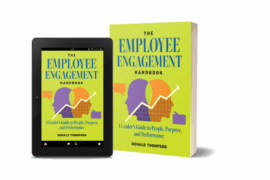
Companies that get employee engagement right outperform their peers across the board. Yet too many executives struggle to build high-trust workplaces where engagement thrives. For deep insights on building engagement, look for The Employee Engagement Handbook: A Leader’s Guide to People, Purpose, and Performance, coming in February 2026. Pre-orders are now open.
Amber Keister is a Content Strategist at The Diversity Movement. She has spent more than 20 years as a journalist for publications throughout the South. Connect with her on Linkedin.